Can we recover precious metals such as palladium?
Recovery of palladium from process water in a plastics electroplating plant
Recycled palladium (2024)
Material value recovered
per kg of recovered palladium

The Hansgrohe Group, headquartered in Schiltach, is a leading company in the bathroom and kitchen industry, with its AXOR and hansgrohe brands renowned for innovation, design, and quality. Through its faucets, showers, and shower systems, Hansgrohe gives water form and function. The Hansgrohe Group ensures its high quality standards through production at seven company-owned manufacturing sites.
The global palladium shortage and high industrial demand are making efficient recycling increasingly essential. Hansgrohe SE uses an innovative process to recover palladium from the rinse water produced during plastic electroplating, thereby closing the loop for this valuable precious metal.
Starting situation
At Hansgrohe SE’s plastics electroplating plant in Offenburg, palladium is used in very low concentrations. Nevertheless, at the end of the process, sludge containing palladium is produced, which until now has had to be disposed of as hazardous waste.
Against the backdrop of increasing palladium shortages and high industrial demand, there was a desire to recover the precious metal used from the process water and return it to the material cycle.
Solution
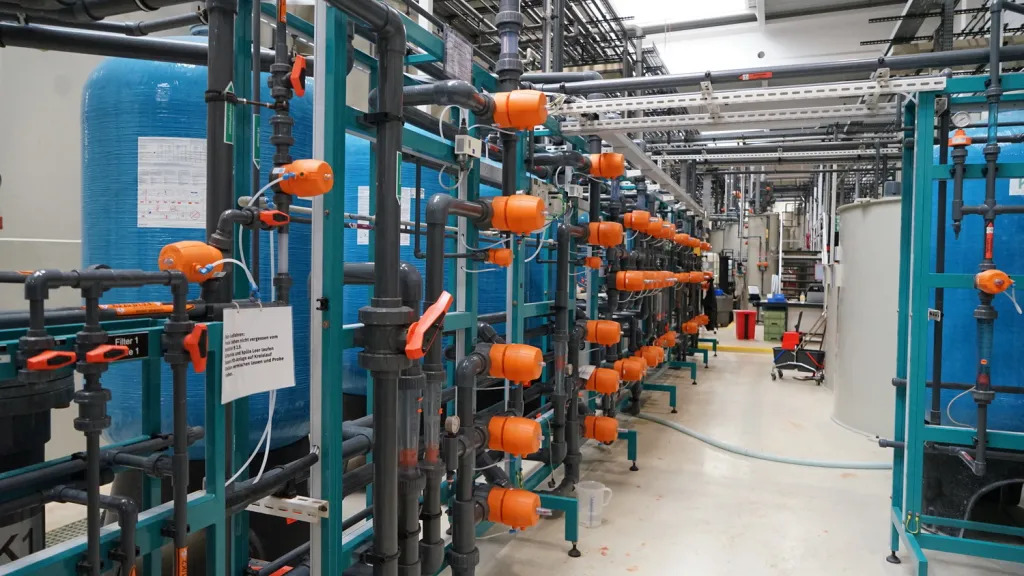
Since 2018, Hansgrohe SE has been working on recovering palladium from process water used in plastic electroplating. A plant designed for this purpose has been in regular operation since 2021, enabling a closed-loop material cycle.
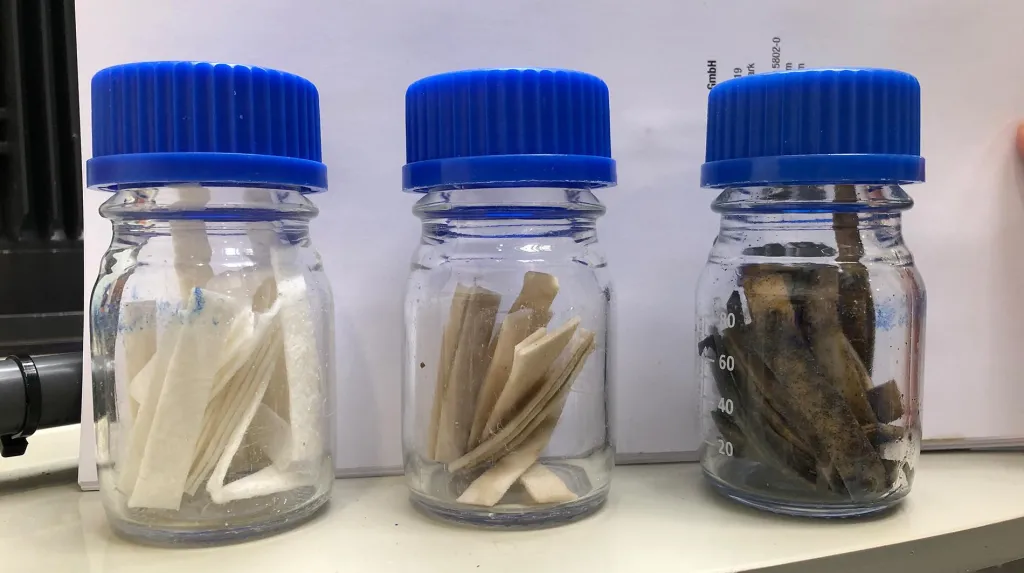
The palladium in the water is bound to tin. Hydrogen peroxide is used to separate the substances. This is thanks to an optimisation carried out in 2024: since then, hydrogen peroxide has been used instead of caustic soda, which prevents the formation of toxic decomposition products and avoids deposits on the ion-exchange resins. Once the tin and palladium compounds have been separated, the palladium is adsorbed onto ion-exchange resin fleece under controlled pH conditions.
Whilst the definition and piloting of the process were entirely in the hands of Hansgrohe, the technical implementation of the plant was carried out by aqua plus – Wasser- und Recyclingsysteme GmbH. The textile fleeces were developed by the German Textile Research Institute North-West (DTNW). The project was funded by an internal budget allocation for sustainability projects.
Result
The process enables valuable quantities of palladium to be recovered from process water. In 2024, around 4.9 kg of palladium was recycled, which would otherwise have been lost with other waste. This corresponds to a material value of approximately €200,000.
This reduces the use of virgin materials and closes the resource cycle. Due to palladium’s high emission factor, significant CO₂ emissions can also be avoided: CO₂ savings of around 30,000 kg are achieved per kilogram of palladium.
The project demonstrates how industrial recycling processes can contribute to the recovery of critical raw materials and serve as a model for other sectors. The technology can be used in all plastic electroplating applications – extending beyond the sanitary sector to include, for example, the automotive, jewellery, electronics and dental industries.