


Carbon Management Technologies
Harnessing CO₂ as a reliable raw material while protecting the climate
The future lies in closed carbon cycles
Carbon Management Technologies aim to minimise environmental impact caused by human activity and to reduce CO₂ emissions. In addition to avoiding and reducing emissions this also includes the reuse and processing of greenhouse gases.
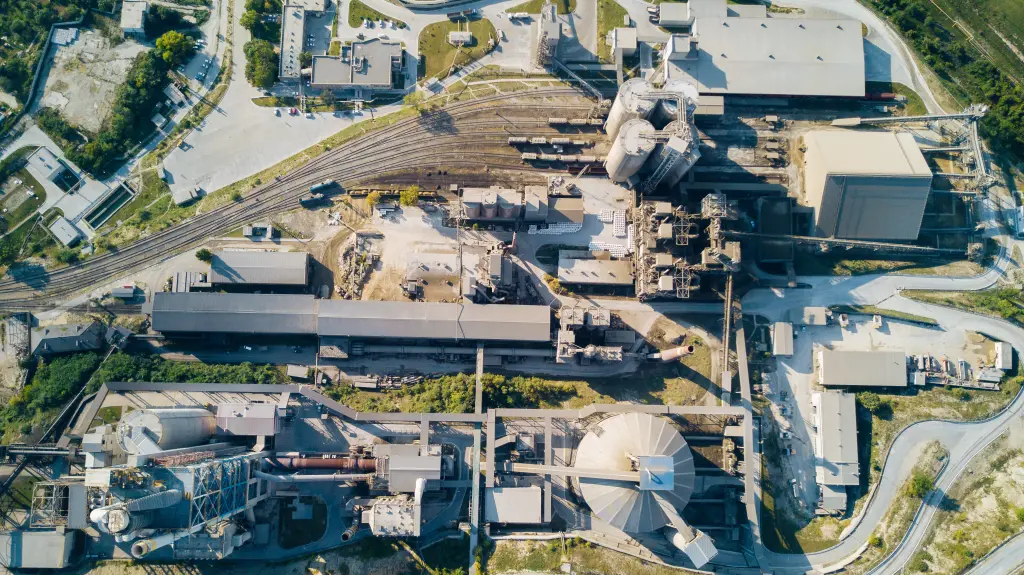
In many industries, such as cement production, it is impossible to fully avoid carbon emissions. For instance, the calcination process releases CO₂ as an unavoidable chemical by-product.
The solution lies in closing carbon loops - using CO₂ as a raw material for new products. This approach leads to sustainable business models that link ecology with economic viability. Where CO₂ is not used as a resource, it can be stored safely, thus preventing it from entering the atmosphere and contributing to global warming.
Market Segments in Carbon Management Technologies
Carbon Management Technologies is divided into two market segments, each facing distinct challenges. Both segments include innovative providers and service companies that develop, design, and implement cutting-edge solutions. The GreenTech BW Atlas offers an overview of relevant solution providers in the field of green technology and cleantech.
Carbon Capture and Storage (CCS) – Secure CO₂ Storage
In carbon capture and storage (CCS), carbon dioxide from industrial processes is captured directly at source preventing it from entering the atmosphere The captured CO₂ is then compressed and stored deep underground in geological formations such as:
- Depleted oil and gas fields
- Deep saline groundwater aquifers
This technology plays an essential role in long-term carbon management strategies.
Carbon Capture and Utilisation (CCU)
Carbon Capture and Utilisation (CCU) also captures CO2 directly at the source before it escapes into the atmosphere. The carbon is then separated from the oxygen and reused as a valuable raw material. Carbon is essential to all products – from cars and sneakers to smartphones.
Examples of CO2-based applications include:
- Production of fuels and construction materials
- Use in the chemical industry as a raw material for synthetic materials such as plastics
- Use in the food and beverage industry, e.g. for carbonating drinks
For the most relevant market scope - CO2 recycling/technology/utilization - the size is best summarized as being around $1.5–6 billion in 2024–2025, depending on what is included within the definition.
Rising raw material prices and fragile supply chains make investments in carbon reuse and climate technology particularly attractive.
Get in touch!
Carbon management technologies have a lot of potential. Do you have ideas, suggestions, proposals or questions that you would like to discuss with us? Then get in touch with us!
“CCS and CCU utilise the comparatively high CO2 concentrations at point sources and start before the CO2 is released into the atmosphere. These technologies are therefore key components of integrated carbon management.”
Dr. rer. nat. Carola Seelmann Project Lead Carbon Management
