

Information
Mall GmbH, headquartered in Donaueschingen, is one of the leading providers of high-quality system solutions for environmental and water protection in Germany and Europe. The medium-sized family-owned company was founded in 1952 and today employs approximately 500 people at various locations in Germany, Austria, and Switzerland.
The Mall Group comprises nine production facilities in Donaueschingen, Ettlingen-Oberweier, Haslach in the Black Forest, Coswig and Klieken (Coswig) / Anhalt, Nottuln and Coesfeld in the Münsterland region, as well as in Asten and St. Valentin in Upper Austria.
The Mall Group is owned by the Roland Mall Family Foundation, established in 2014. The foundation ensures the financial stability of Mall GmbH while preserving its character as a socially responsible family-owned business.

Services
Product Line

As a specialized supplier with expertise in process engineering, Mall GmbH offers a comprehensive range of products for various applications:
- Stormwater management: Reinforced concrete tanks ranging from 1 to 1,000m³, used for the utilization, treatment, retention, flow control, and infiltration of stormwater in various sectors, including municipal, industrial, commercial, and residential construction.
- Separators:
- Separators for light liquids and fats that prevent harmful substances from entering water bodies
- Systems for the discharge, retention, separation, and storage of water-polluting liquids
- Washwater treatment systems
- Wastewater treatment plants: Decentralized wastewater treatment plants for 4 to 300 population equivalents
- Pump and system technology: Pump stations for pressure drainage in residential and municipal settings, backflow prevention loops, valve chambers, and well shafts
- Pellet and wood chip storage systems: For nearly 15 years, Mall has also been committed to renewable energy and manufactures pellet and wood chip storage systems in various sizes.
- Products for the drainage of silage areas: Drainage solutions for the removal and storage of manure, liquid manure, silage effluent, and liquid fermentation residues
Mall and its technical consulting team support projects from initial planning through to final implementation. “Off-the-shelf” reinforced concrete tanks are just as much a part of this process as sophisticated custom solutions, even in challenging terrain. Based on project-specific requirements, Mall’s experts handle the planning, sizing, and design of the systems and then implement them in collaboration with the customer. And even long after the systems are up and running, Mall remains a trusted partner for services such as regular maintenance and inspections, as well as repairs and renovations of existing systems.
Products
Rainwater Management

When city centers are redesigned according to the “sponge city” concept and new developments are planned accordingly, municipalities need blue-green-gray infrastructure to largely restore the natural water balance even after construction. Essentially, the goal is to allow stormwater to evaporate, infiltrate, or be drained in the same way it would have on undeveloped land.
Rainwater Management Tools
In the construction of industrial parks, transportation facilities, and residential buildings, decentralized systems for retaining and treating stormwater are increasingly being used. This water is discharged in controlled quantities and treated into a water body or infiltrated into the ground—an economical and, at the same time, ecological alternative to co-treatment in municipal wastewater treatment plants. The area over which the water falls is decisive for the pollution of stormwater. This is because stormwater runoff from impervious surfaces can be problematic due to its volume or the substances it contains. The consequences are hydraulic overload and excessive pollutant loading of the receiving water bodies. Depending on the nature of roof surfaces and the pollution load from traffic areas, the resulting stormwater is contaminated to varying degrees. Various treatment processes are used to enable discharge into a water body or groundwater after treatment.
Stormwater Treatment: Stormwater treatment facilities are designed to protect water bodies. These may include flowing or standing surface waters, or groundwater bodies. The intensity and requirements of the treatment are determined, on the one hand, by the expected pollution load based on the characteristics of the watershed and, on the other hand, by the protection needs of the receiving body of water.
Retention and Infiltration: In preparation for the effects of climate change, the retention and infiltration of stormwater will play an increasingly important role in the future for ensuring the reliable operation of municipal drainage systems, preserving biodiversity in water bodies, and replenishing groundwater. An obligation to retain or infiltrate rainwater may arise from drainage regulations or through a permit issued under water law.
RainwaterUtilization and Evaporation: The areas of rainwater utilization and rainwater evaporation are becoming increasingly important in water management. The goal, with the introduction of DWA Guideline 102-4, is to restore the water balance—the ratio of evaporation, infiltration, and runoff—after development to be as close as possible to the conditions that existed before development.
Separator
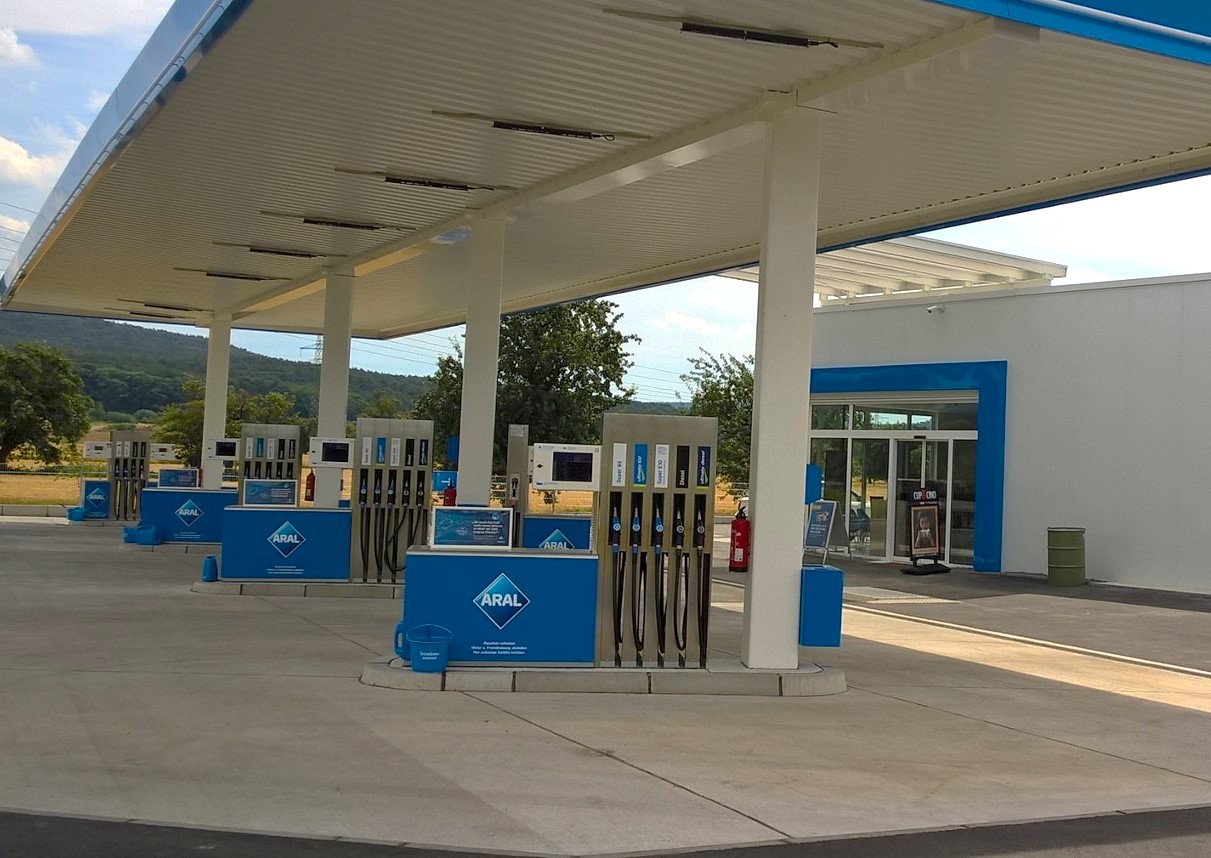
Water contaminated with mineral-based light fluids, lubricants, or animal and vegetable fats must undergo pretreatment in accordance with legal requirements. This pretreatment must be performed in a certified separator. These can be either light liquid separators or grease separators.
Mall also manufactures water protection systems for use in facilities for the storage, filling, and transfer (LAU facilities) or for the retention/separation (AU facilities) of water-polluting liquids. In the washwater treatment product line, Mall offers systems for recycling washwater that biologically treat the water so that it can be reused.
Wastewater treatment plants
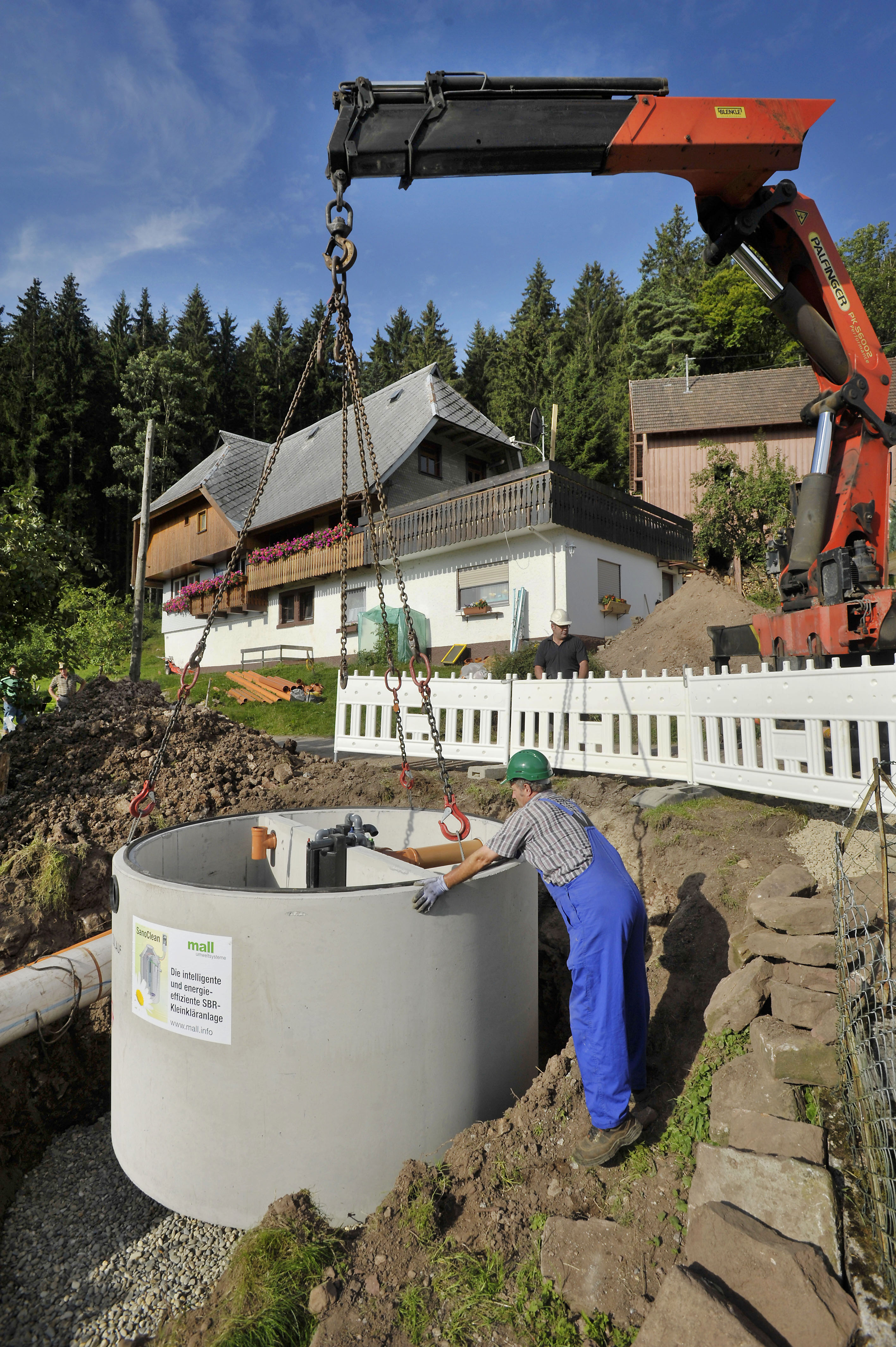
For wastewater treatment at rural properties, small-scale wastewater treatment plants are not only a sensible solution, but also, in most cases, the most cost-effective one. Mall manufactures fully ready-to-connect treatment systems in robust and durable reinforced concrete tanks, which are available in various sizes for 4 to 300 residents, delivered nationwide, and installed in no time.
Pump and Plant Engineering
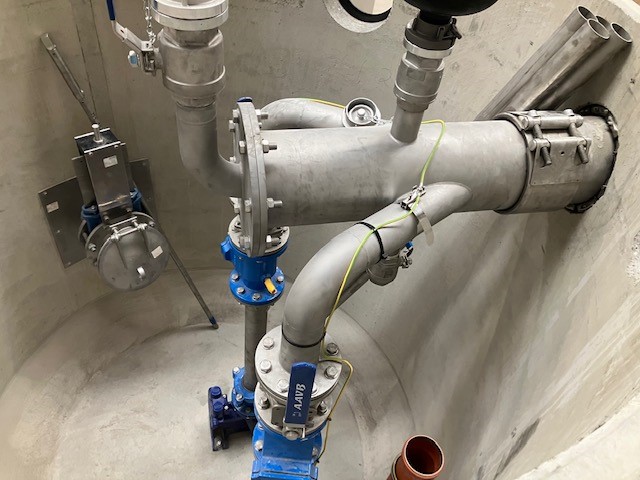
In the absence of a gradient, with a high water table, or under other unfavorable topographical conditions, it is either impossible or too expensive to discharge sewage and stormwater through a gravity sewer. In such cases, a Mall pumping station is the cost-effective solution.
Variable Sizing
The pump chambers are monolithic circular structures made of high-quality reinforced concrete with a maximum height of 3.25 m. For greater shaft depths, shaft extension sections are available up to a height of 3 m. In addition to its standard product line, Mall also supplies large-format reinforced concrete rectangular structures with wet and dry chamber compartments.
Ready-to-Connect Compact Pumping Stations
Alternatively, Mall also offers fully pre-assembled compact pumping stations. Since all parts are kept in stock in sufficient quantities, short delivery times are guaranteed. For areas and drainage features located below the backflow level, the system can be supplemented with a backflow loop, which prevents the basement from flooding when the water level rises within the sewer network.
Valve Chambers and Manhole Chambers
When pressure pipelines are equipped with valves, Mall valve chambers are the right choice. Delivered ready for installation, they enable quick installation and high quality thanks to factory assembly. Working closely with the designer, Mall uses only high-quality, corrosion-resistant materials for piping and valve equipment.
New Energy Sources

Underground Pellet Storage
Mall also offers reinforced concrete containersfor underground pellet storage. Wood pellets are stored out of sight, safely, and in a dry environment in the watertight and frost-proof ThermoPel underground storage units. Outdoor storage provides optimal fire protection and saves valuable basement space.
Mall also offers underground storage units with a usable volume of 40 to 120m³and a truck-accessible loading opening for wood chip heating systems, which are particularly common in the municipal sector.
Drainage of silage areas
Liquid manure, solid manure, slurry, silage effluent, and fermentation residues are valuable farm fertilizers for agricultural operations, but if stored or applied improperly, they can pollute our waterways. Discharging these substances into sewer systems, surface waters, and ditches, as well as allowing them to seep into the ground and enter the groundwater, is therefore prohibited. Slurry, liquid manure, silage effluent, and liquid fermentation residues must be collected in storage tanks and properly recycled.
Projects
Markets
Contact
Mall GmbH
Mall GmbH
Hüfinger Str. 39-45
78166 Donaueschingen
Germany
More locations
Mall GmbH Austria
Mall AG
Mall GmbH is responsible for the content of this company profile as well as the compliance with the copyrights of the image material.